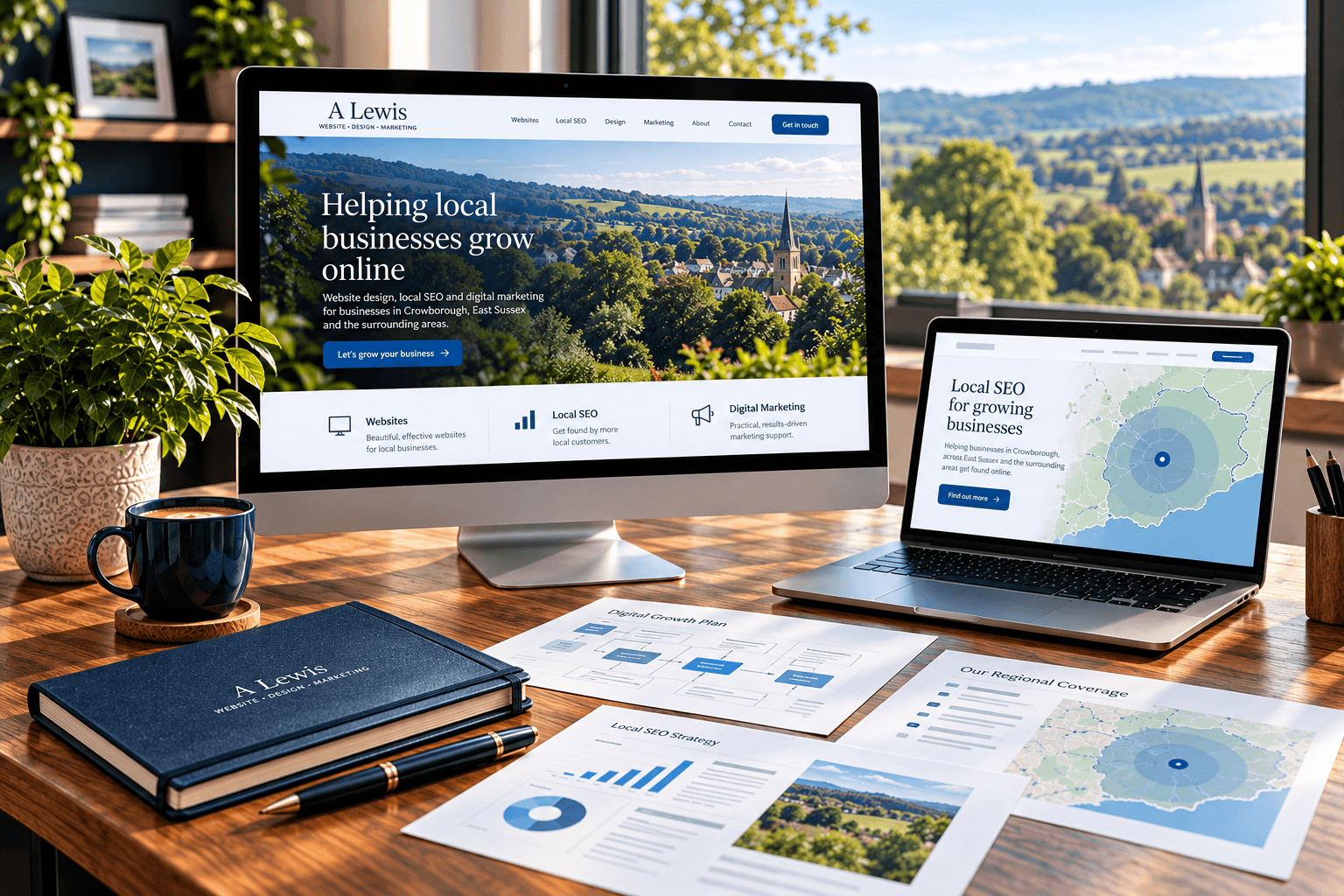
Professional Websites Built for Local Business Growth.
A Lewis helps businesses build clearer, more useful SEO foundations so customers and search engines can understand what they offer, where they work and how to get in touch.
Based in Crowborough, I support businesses across Tunbridge Wells, East Grinstead, Tonbridge, Uckfield, Heathfield, Forest Row, Wadhurst, Mayfield, Haywards Heath, East Sussex, Kent and nearby areas. SEO work can support a new WordPress website, improve an existing page or provide a practical plan for ongoing content and local visibility.
Search engine optimisation is the process of improving a website so that search engines can discover, understand and assess its content, while real people can find the information they need. It is not simply a matter of repeating a phrase on a page. Useful SEO combines a clear purpose, helpful content, sound page structure, technical accessibility, relevant internal links and an honest explanation of the services and locations you support.
When someone searches for a service, they are often trying to solve a particular problem. They may want a website designer in Crowborough, a local business to redesign an outdated site, a graphic designer for new branding or help understanding why their page is not appearing in relevant searches. An effective SEO page should respond to that intent rather than create a generic block of keywords.
A Lewis approaches SEO as part of the wider customer journey. Search visibility is useful only when the page loads properly, reads clearly, demonstrates credibility and offers a sensible next step. SEO can therefore involve content, design, analytics, Google Business Profile, technical checks, structured data and conversion-focused page improvements.
Answer genuine customer questions with clear, specific information about your services and process.
Make sure search engines and visitors can access, understand and use important pages.
Explain your genuine coverage across Crowborough, East Sussex, Kent and nearby locations.
Use available analytics and search data to identify opportunities instead of relying on guesswork.
SEO does not need to begin with a large, complicated campaign. Many businesses benefit from correcting the fundamentals, improving the pages that matter most and developing a realistic plan. The services below can be delivered separately or combined around your priorities.
Local SEO helps people in and around your service area understand that your business is relevant to their search. This includes more than placing a town name in a heading. It means making your website, contact details, services, business description and location coverage consistent and useful.
For a business based in Crowborough, local SEO may include clear references to East Sussex and nearby towns such as Tunbridge Wells, East Grinstead, Uckfield, Heathfield, Forest Row, Wadhurst, Mayfield and Haywards Heath. If your service extends into Kent or Tonbridge, that coverage can be explained naturally. The content should not imply an office or physical premises where none exists.
A local page should give people a reason to trust the business. Useful information might include the types of customers served, the areas covered, service limitations, project examples, opening information, a telephone number, an enquiry form and clear directions to the next step. Creating genuine, helpful local information is more valuable than producing many near-identical pages with only the town name changed.

Google Business Profile is an important part of local visibility for eligible businesses. A profile should accurately represent the business name, category, services, description, contact options, website, opening information and service area. Images and updates should also support the way the business wants to be understood.
Support can include reviewing the profile information, improving service descriptions, checking the website link, identifying inconsistencies and planning useful updates. Where a business operates as a service-area business, the profile and website should make that clear. It is important not to create duplicate listings, use misleading addresses or add locations that are not genuinely served.
Reviews can support trust, but they must be genuine and follow Google’s policies. A Lewis does not write or invent reviews for publication. Instead, the website and profile should make it easy for satisfied customers to share their own honest experience.
On-page SEO improves the information and structure of an individual page. This can include the page title, meta description, URL, H1, H2 and H3 headings, opening copy, service details, internal links, image alternative text, calls to action and frequently asked questions.
Content should be written for the reader first. A service page needs to explain what is provided, who it is for, what the process involves and what someone should do next. It should also reflect the language customers use when describing their needs. Keywords can help indicate relevance, but forced repetition can make a page difficult to read and may weaken trust.
Optimisation can also identify missing information. A visitor may need to know whether you work with business clients, whether you offer redesigns, which platforms you support, how quotations work or how long an enquiry usually takes to receive a response. Adding useful answers improves the page for people and gives search engines more context.
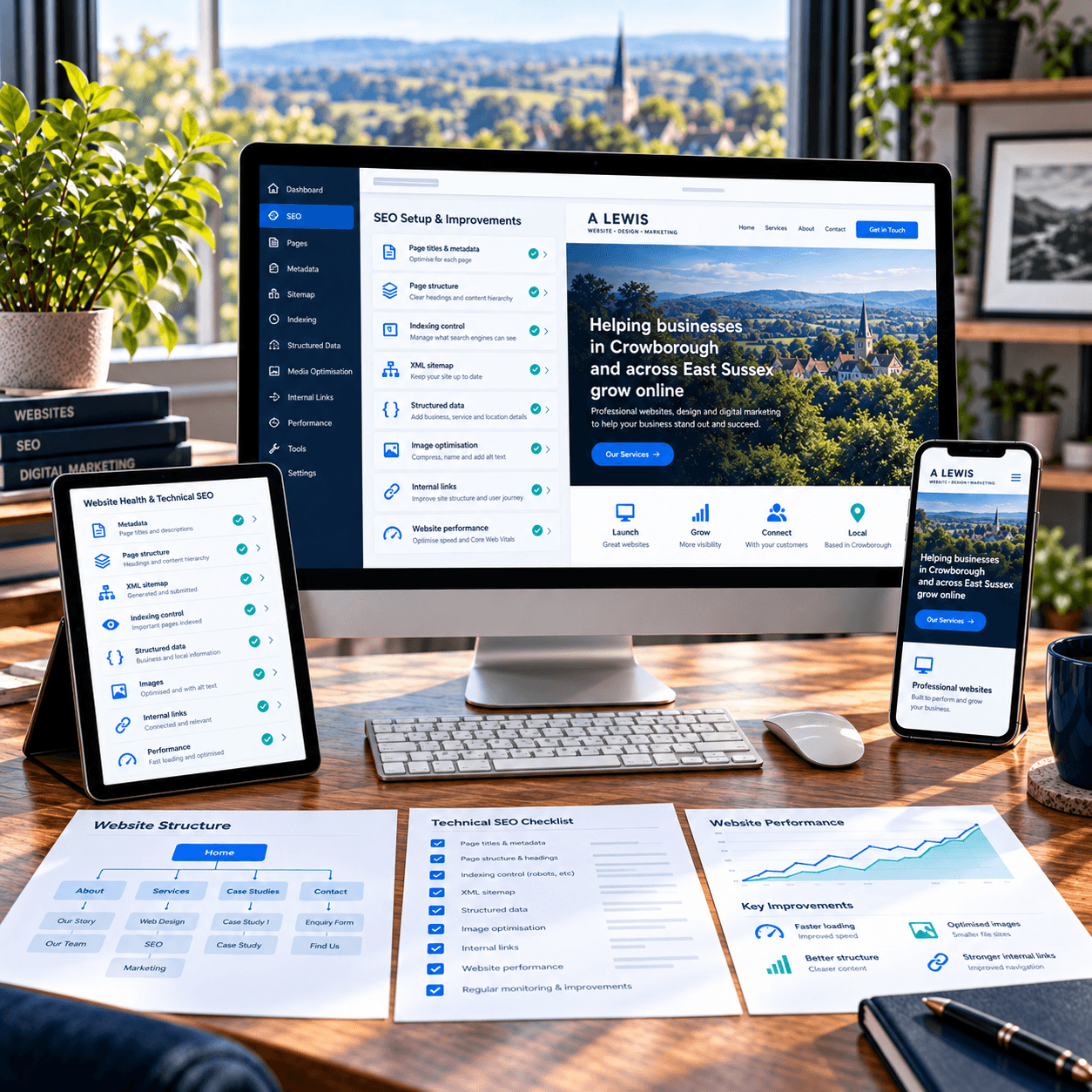
WordPress provides a strong publishing platform, but search performance still depends on how the website is configured and maintained. SEO setup may include reviewing indexability, XML sitemaps, canonical URLs, redirects, titles, descriptions, headings, image information, internal linking and page templates.
Rank Math can be used to manage many SEO settings within WordPress. The plugin should be configured around the actual website rather than enabling every available feature without review. Unnecessary schema, duplicate metadata, poor redirects or incorrect noindex settings can create confusion. A page-by-page review helps ensure that the important content is discoverable and accurately described.
WordPress and Elementor layouts should also be checked on mobile. Horizontal overflow, hidden headings, unreadable text, buttons that are too close together and slow-loading images can all affect the experience. SEO is closely connected to usability because search visitors still need to read and use the page once they arrive.
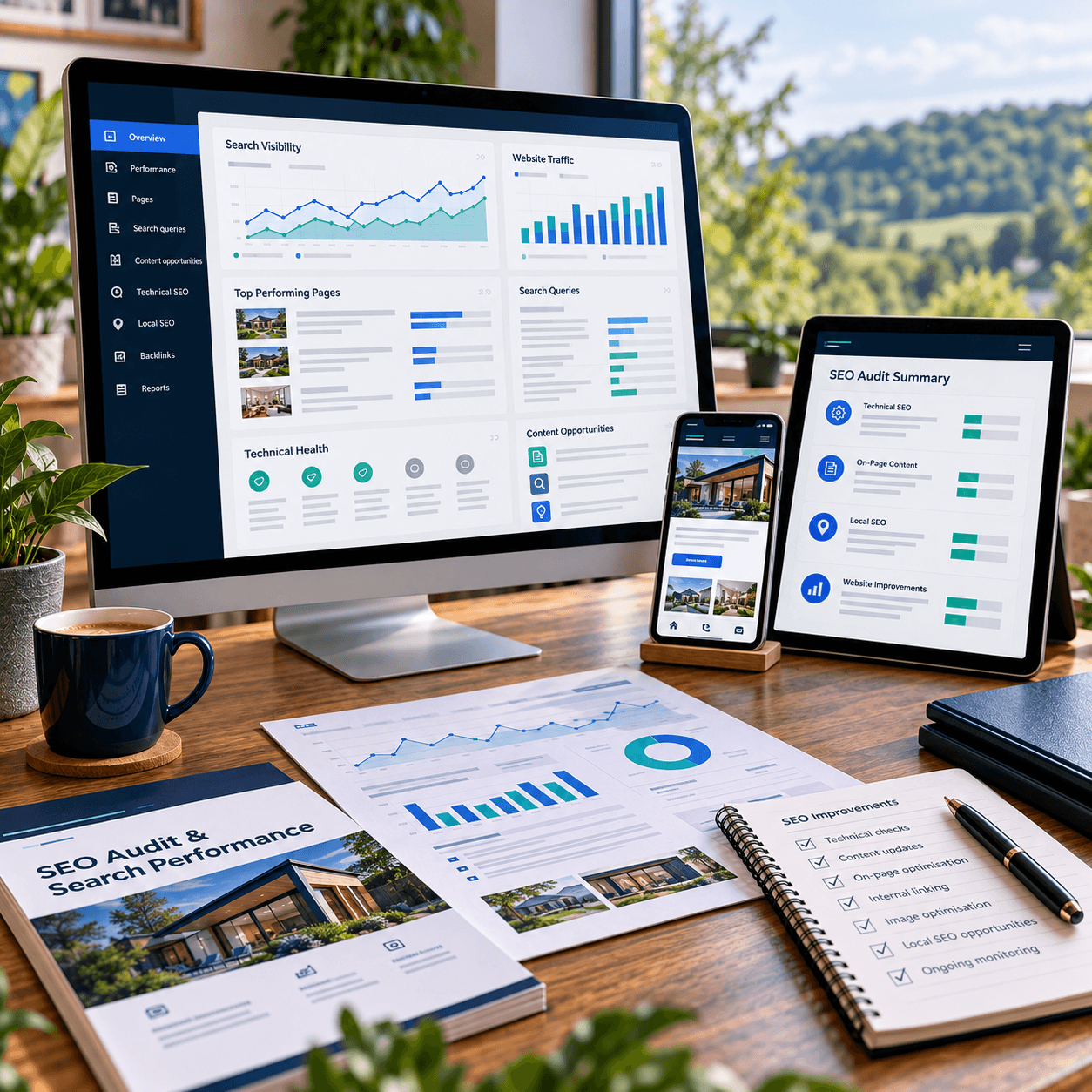
An SEO audit is a structured review of how a website is currently performing and what may be preventing improvement. Depending on the project, it can include technical access, page titles, metadata, headings, content depth, internal links, image optimisation, mobile behaviour, broken links, redirect issues and local information.
Google Search Console can show which searches display your pages, which pages receive clicks and where opportunities may exist. Google Analytics 4 can help show how visitors use the website after arriving. Reports should be interpreted carefully: a fall or rise in traffic may be affected by seasonality, competition, changes to search results, tracking configuration or changes in the business itself.
A useful report should lead to prioritised actions. This may mean improving one important service page, correcting a technical issue, adding a missing FAQ, strengthening internal links or updating the Google Business Profile. A long list of warnings is less helpful than a clear explanation of what matters most.
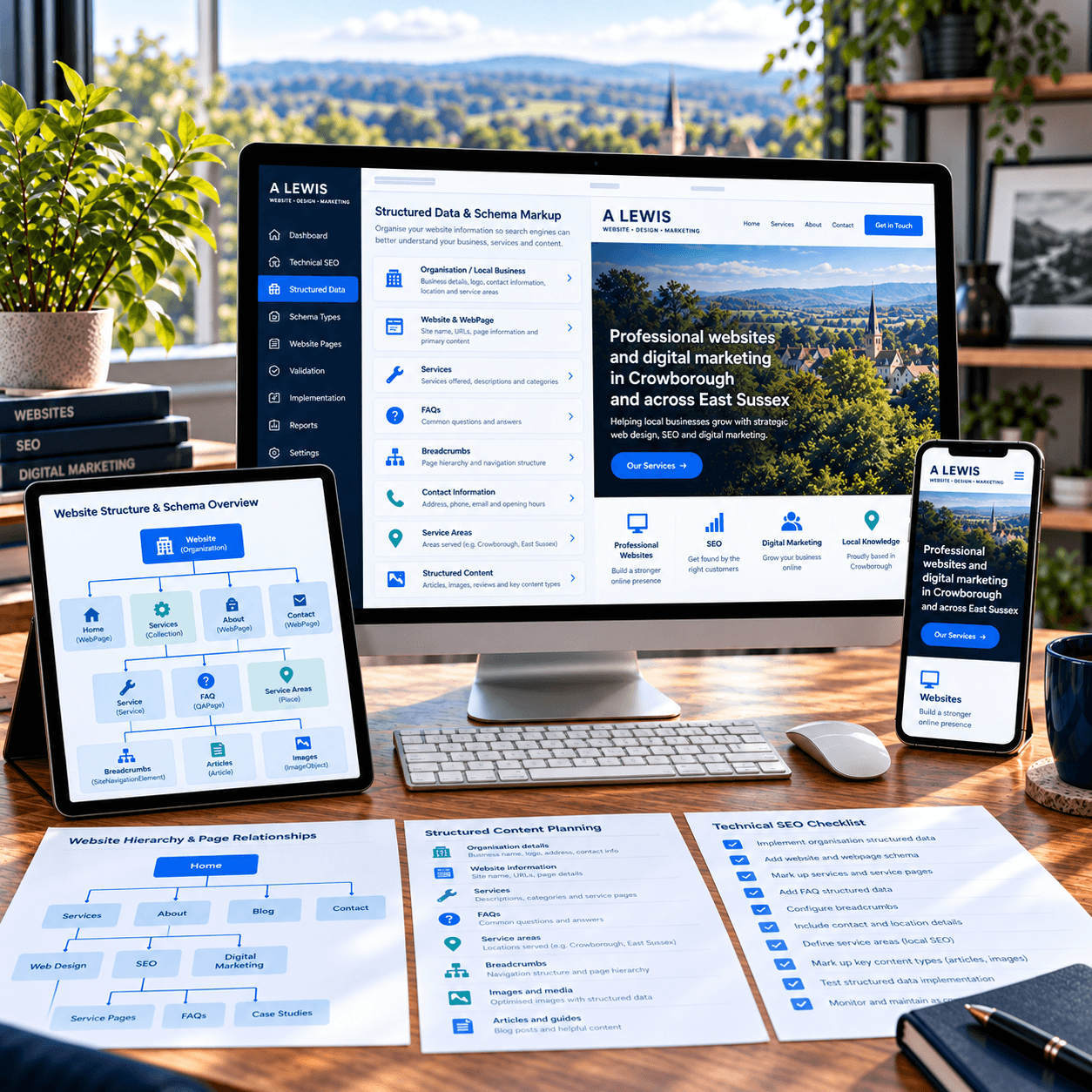
Structured data gives search engines additional context about a page. Depending on what is visibly presented, a website may use relevant Schema.org or JSON-LD types such as WebPage, Organization, ProfessionalService, LocalBusiness, BreadcrumbList or FAQPage.
Schema should describe real information that users can see on the page. It must not be used to claim services, reviews, locations or awards that are not genuine. FAQPage markup should match visible questions and answers. Review markup should only be used where the reviews are authentic, properly attributed and eligible for the intended use.
Structured data is not a guarantee that Google will show a rich result. It is one way to make page meaning clearer. The markup should be validated, kept current and reviewed when the visible content or business details change.
Search traffic is only useful when the destination page helps people make a decision. A strong SEO plan should therefore consider the website design, brand presentation, content and enquiry route together. A Lewis can connect SEO with the other services available to your business.
Responsive WordPress websites, redesigns, landing pages, small-business websites and ongoing care.
Brand identity, business stationery, social graphics, website assets and marketing materials.
Content, campaigns, social media support and reporting that help your activity work together.
SEO should be understandable and proportionate to the business. The process below keeps the work focused on genuine improvements.
Google Analytics 4, Google Tag Manager and Search Console can provide useful information about visits, events, search queries and pages. These tools must be implemented in line with the website’s privacy information and cookie-consent settings. Analytics or marketing scripts should not load before the appropriate consent where consent is required.
Reporting can show trends and opportunities, but it cannot remove uncertainty. Search rankings change, competitors publish new content, Google changes how results are displayed and customers behave differently at different times of year. SEO can improve the clarity and technical quality of your website, but no specific Google position, traffic number, enquiry volume or revenue result can be guaranteed.
Progress is best judged against agreed objectives. These might include improving the visibility of a priority service, increasing relevant local impressions, making a page easier to use, correcting indexability problems or generating more suitable enquiries. The right measure depends on the business.
SEO is therefore not only an exercise in attracting visitors. It is also an exercise in making the website more useful once someone arrives.
Visitors can see what you offer, who you help and whether your service fits their needs.
Consistent information, useful evidence and accurate contact details reduce uncertainty.
Internal links and calls to action help people move from an answer to an appropriate enquiry.
Well-organised pages are easier to update when your services, content or coverage changes.
A Lewis is based in Crowborough and supports suitable businesses across East Sussex and Kent. Areas include Tunbridge Wells, East Grinstead, Tonbridge, Uckfield, Heathfield, Forest Row, Wadhurst, Mayfield and Haywards Heath, together with nearby communities.
Local search content should be specific enough to help customers but honest enough to reflect how the business operates. A service-area business may explain where it travels, while a business with premises should give accurate contact and location information. The website should not imply an office in every town simply because those towns are included in a keyword list.
Location references can be included in service pages, project examples, FAQs and supporting content when they are relevant. A small number of useful pages is usually better than many thin pages repeating the same wording. The aim is to help customers decide whether the business is suitable and how to enquire.
No. Rankings are affected by competition, relevance, website quality, content, authority, search changes and many other factors. A Lewis focuses on practical improvements and honest reporting rather than making ranking guarantees.
There is no fixed timetable. It depends on the website’s starting point, competition, content quality, technical issues, authority and how consistently improvements are made. Some corrections may be noticed quickly, while broader visibility work can take longer.
Yes. Support is available for suitable businesses in Crowborough, Tunbridge Wells, East Grinstead, Tonbridge, Uckfield, Heathfield, Forest Row, Wadhurst, Mayfield, Haywards Heath, East Sussex, Kent and nearby areas.
Yes. SEO can be considered during planning and build, including page structure, headings, internal links, metadata, image information, local coverage, Rank Math, analytics and relevant structured data.
We use cookies to improve your experience on this website. You may choose which types of cookies to allow and change your preferences at any time. Disabling cookies may impact your experience on this website. You can learn more by viewing our Cookie Policy.